Blog

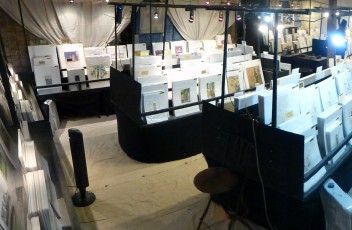
Evening Scene of MAPSandART's booth at Blue Hills at Round Top, TX

Antique Maps St Augustine, FL

Some people may wonder where our shop is in St Augustine, FL. When participating in an antique show we are often asked where our shop or gallery is in St Augustine. I like to answer: “You are in our gallery right now”, even though we may be in Round Top, TX.  We also get the same question from our online inquiries.

The fact is that our business, MAPSandART, participates in antique shows and has always avoided the constraints of a shop or gallery. In this way we can offer a greater variety of vintage maps, works of art and antique prints to a wider audience. We have maps of Indiana when in Indiana, maps of Texas when in Texas and maps from all over the world when exhibiting at the resorts of Vail, Beaver Creek, Sun Valley or Jackson Hole.

Now you can visit our “stores” online from wherever you are and find an overwhelming and ever changing selection.  You can find us on 1st Dibs.com, OneKingsLane.com and Chairish.com.

So the question is, if you cannot find us in St Augustine where can we find you?
Easy! Just go to our Show Schedule to find dates and locations of our future venues, or visit our web site at www.MAPSandART.com
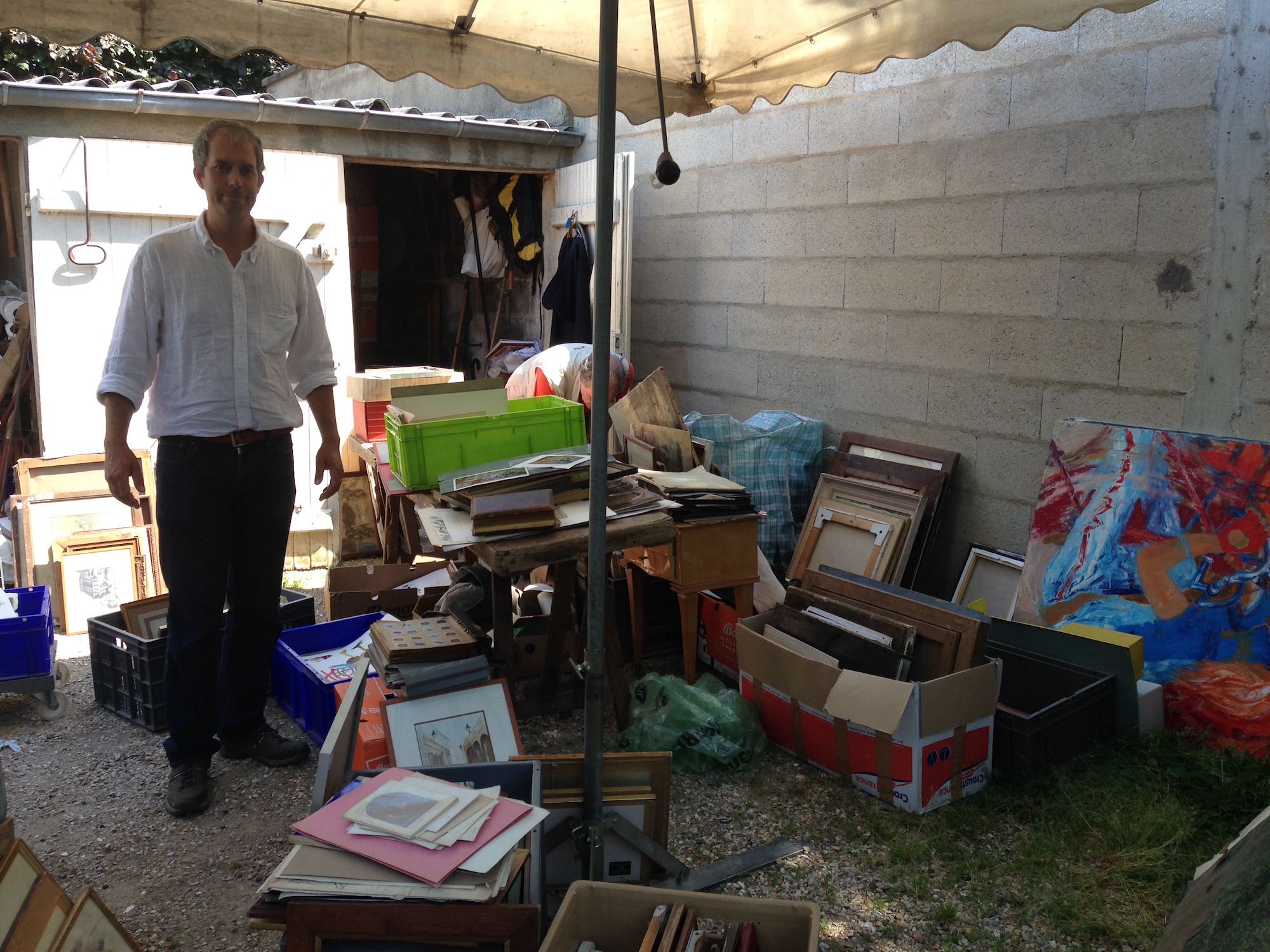
How to Identify an Antique Print in 8 Steps

Here are 8 steps on how to identify an antique print.

Secret 1: We are going to assume you have an authentic old print and that it is not a reproduction. Reproductions are usually not worth very much money because they are more recent and have been mass produced. Your first secret is that only an antique print can be considered a real antique.

Secret 2: What is the subject matter of my print? This may seem obvious, but can you describe it in a couple of words: Red Rose, Eiffel Tower, lake landscape, religious saint etc. Here you want to write down a few possible two word descriptions that describe your print.

Secret 3: Is there a title to my print? Often a title is present below the image of your antique print describing the location, people or subject depicted. This is one of your most valuable bits of information in identifying your print. Write this down.

Secret 4: Is there a copyright at the bottom of your print? If there is a copyright year then your print is probably less than 200 years old. The English had started printing copyright years in the late 1700s and this was followed by other printers in the 19th century. Take note of the year.

Secret 5: Is there any fine print on the bottom left? This is traditionally where the name of the artist from which the print was made is listed. The name is often followed by the letters del, delin or delt which is the latin abbreviation and term for “drew”. This is the artist’s name. Many classical prints of the 19th and earlier centuries carry this annotation. Don’t forget to write this down.

Secret 6: Is there fine print on the bottom right of your antique print? This is where the name of the engraver is found. The engraver was the one who engraved the image of the art which is on your print. The engraver’s name is often followed by the latin abbreviation sc. for sculptor. Write this down as well.

Secret 7: Take all your notes and start searching on the internet for the specific names you have written down. If the title is “Schonenberg Castle at Dawn” type those in Google exactly as they appear on your print and put them in quotation marks to get a search with those specific words. You may be pleasantly surprised to find another print like yours in a university or institution whom you can trust in the identification of your print.

Secret 8: Repeat your search for artist names and engraver names. In the absence of a title for your print use your second secret and search with your own description title. Don’t put these in quotation marks. This will take you more time, but you should find it in the end.

Now armed with this information you may like to search how much it is selling for. Look for your newly identified print on line!

Best Tips when Hunting for Antique Art

David Hunting for Antique Art in Paris
David Hunting in Paris for Antique Art

Hunting for antique art is a lot of fun. The secret of effective antiquing is to know where to look. As professional art dealers, my wife and I spend a fair amount of time in the search of the unusual and unique pieces. We cover many fun places here in the USA and in over 10 different countries. Here we will share with you how you can benefit from our experience.

The main secret is to be quick in making decisions, we follow our gut feeling and buy, buy, buy (and then study, restore and research each piece). The problem is finding the right opportunity to buy, as the occasion does not present itself frequently. Therefore when buying we need to cover many venues as quickly as we can, this is why we don’t spend too much time thinking about an acquisition but rather follow as we said: our gut feeling.

Where to go hunting for antiques? In our case we are looking for artwork on paper, antique prints and old maps that date over 500 years old to the present. Old paper such as what we are looking for can occasionally be found in the midst of traditional antiques such as furniture found in malls and antique shows.

The best advice is to map out your itinerary (of course we do this, we sell antique maps). You need to know the opening hours of all the venues you are covering and have phone numbers on hand in case you have difficulty locating a store or market. Start early and carry lots of bills in small denominations. If writing checks, keep a couple of pens handy as well as your driver’s license.

To cover a wide area, my wife and I split up. We will enter an antique mall and head off in opposite directions. We play a game we call Quick Tiq (for Quick AnTIQuing). Whoever finds the oldest, most unusual and unique pieces first, wins. Believe me we are fast.

Keep your eyes focused on the prize, turn off your phone, scan quickly in all directions and give special attention to bottom shelves and higher up. Most people don’t look there.

We will visit antique malls, antique stores, consignment shops, thrift stores and flea markets in search of the prize. There is always a little something.

Now we are not all art dealers and do not have unlimited space to exhibit our finds at home or office, so we need to be selective. This doesn’t mean you can not play a game of Quick Tiq! Set yourself objectives. One of our favorites is to be the first to find something that is over a certain age, such as 200 years old when in Europe and 100 years in the USA. For this you should keep your cell phone on to call or text your opponent with the location of your win. Happy hunting for antique art!

Continue reading “Best Tips when Hunting for Antique Art”

What is a Giclee Print and How Does it Fit into the Art World? Buyers Beware!

Giclee art, giclee prints and giclee paintings are all the rage these days. They are, however, not always adequately represented. We will give you greater insight in this article about the intricacies of an industry that has begun to often mislead the public.

First what does giclee mean? Giclee is a modern printing technique that is used almost exclusively in creating a facsimile, a reproduction. The word “giclee” is from the French word for spittle, as the printer spits in a spraying fashion the colors being reproduced onto paper or canvas. It is not a very pretty word in French as it also refers to ejaculation and is therefore not very popular in France in trying to sell one’s art as you can imagine.

The giclee printing technique uses a fancy printer which is not cheap making it mostly unavailable to the general public. The giclee image is generally of better quality than what you can obtain from your laser or inkjet printer. You may have seen giclee printing services at your local art store or online. These services will offer, on submission a high quality digital picture, the option to print that very image onto paper or canvas of varying sizes. You can order as many as you like and they will all look alike. The giglee printing company may enhance some colors for you and will keep your digital image on file for you to order more reproductions in the future. The set up cost is high enough to eliminate the general public and reserve the technique to artists, galleries, framing shops and small to large businesses. You do not just print one giclee as it would not make good business sense.

Giclees are offered throughout the art world today as real works of art and are often signed and numbered by the artist. Their appeal is in the perceived reasonable price and accessibility, they are nonetheless just copies costing very little in production. Philosophically art becomes art when the artist gives it life. If the artist wishes to distribute cheap versions of his or hers original work of art by using giclee then that is legitimate. There are more questionable circumstances though.

Giclee prints and giclee paintings are more and more often offered as the “real” thing. You will find them listed as “Original Giclee Painting” or “Original Giclee Art” which is very misleading. It has been our personal experience as dealers of original art that the public understand giclees to be original paintings or original art. Original art is unique in scope, it is not reproduced in any way and is not a knock-off of an original painting. Therefore Buyers Beware: when you buy a giclee you are just buying a fancy photocopy.

MapsandArt.com is your online art, map and print store in which you can:

LEARN about engravings, etchings and antique art in general by visiting the REFERENCE CENTER on our website COMPARE thousands of original works of art on paper by viewing products and zooming in with our magnifying tool. SHOP for original art, old maps and antique prints at our convenient ecommerce store.

We have thousands of antique prints, old maps and original art on paper for sale, visit our website at http://www.mapsandart.com.

What is the Difference between Antique and Vintage?

Antiques are items that were manufactured over 100 years ago. Used items which are less than 100 years are considered vintage.

This very simple definition can create much controversy among antique dealers, collectors and even wine drinkers! There is only one official definition of antiques in the United-States from US Customs in the Smoot-Hawley act of 1930. It basically says that an antique must be over 100 years old to be called an antique. In Europe and indeed in many other countries around the world there are many more laws governing antiques which help to define the subject. The US lacks such a base and this explains why there are such a variety in quality of “Antique” stores and malls around the country.

An antique store in France (Antiquites) will have to be operated by a state approved professional that has undergone appropriate studies in art, history and valuation. Those that do not have this training sell in stores or fairs called “Brocantes” which must hold a “Livre de Police” or Police Book in which items that are bought and sold are listed to fight against theft. All others can sell at the “puces” or flea markets where no legal mention of authenticity can be maintained.

Such safeguards do not generally exist in the US so the market for antiques is a wild place where dealers can use the word antique to describe items from the 1940s or even sell reproductions under dubious terminology such as Antique Chest circa 1940s. Such terms help increase the value in the eye of the buyer but nonetheless it is only a used chest (unless it was made from a desired designer or manufacturer).

Using the word “Antique” can up the price on a very simple object. Keep this argument in mind, it will offer you more perspective on price and value.

Now vintage is even trickier as there is no institution such as the US customs to define it. Vintage is the term commonly used by people in the antique world to define objects that have some age and are as one says “of a particular vintage”. We would define a chest of drawers from the 1930s as being vintage.

Now wine drinkers are not very happy with the use of the word vintage for anything else than defining the age of wines. However common usage has applied the word to the world of antiques and collectibles for over a century now in the US. Quite respectable really.

MapsandArt.com is your online art, map and print store in which you can:

LEARN about engravings, etchings and antique art in general by visiting the INFO CENTER on our website COMPARE thousands of original works of art on paper by viewing products and zooming in with our magnifying tool. SHOP for original art, old maps and antique prints at our convenient ecommerce store.

We have thousands of antique prints, old maps and original art on paper for sale, visit our website at http://www.mapsandart.com.

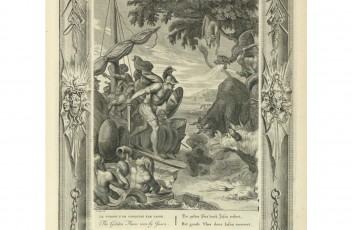
Original Antique Copper Engraving The Golden Fleece 9186m

What Affects the Value of Art, Antique Prints and Old Maps?

Supply and demand: Some subjects are more sought after than others and have become quite difficult to find, this drives up the price.  MapsandArt.com strives to offer a fair market price based on auction results, the price of our competitors and our professional opinion of the value of the piece of art.

Identity: Historical importance, age, famous artist, engraver or map-maker, size and display qualities, aesthetics and decorative qualities all affect the value of art.

Condition:  Art, prints or maps in good condition have more value than those that suffer from a bad backing in a frame, severe creases, large tears and major stains.  MAPSandART.com tries to always offer you works on paper that are in good condition.  Each piece of art has a description of its condition.

Color:  Either in black and white or in color it is important for the colors to be vibrant and not have faded from extended exposure to UV light.

Original or reproduction:  Reproductions are not worth a fraction of the original.  Always buy an original print, artwork on paper or old map.  Reproductions are sometimes more expensive to buy than an original, but are not really worth much.  Go for the original!

Original Antique Copper Engraving The Golden Fleece 9186m

Basics in Caring for Antique Prints

This article will give you the easy basics in caring for antique prints. Antique prints, old maps and manuscripts were printed or written on paper. This paper was treated during its manufacture to hold inks and with-stand the pressure from a printing press. Old paper is organic and undergoes many transformations throughout the years. In order to preserve it there are things you can do. The following points are what you need to avoid doing when dealing with old paper.

1. Don’t expose your print to sunlight.
Paper is sensitive to UV light and it should not be exposed to it. The colors and inks used for writing and printing will fade over time if exposed to natural light. If you do have sunlight, protect your print or paper in a frame using UV protection glass that filters out 97% to 100% UV. You should also avoid exposing your print to fluorescent lights.

2. Don’t leave your print in a humid environment.
Once again as an organic material paper is sensitive to the elements. You should avoid exposing the paper to humid environments. Paper often contains unseen mold that will proliferate under humid conditions and deteriorate your print over time. Keep your prints somewhere dry, such as in a box on the top shelf of your closet in an air-conditioned house.

3. Don’t touch the paper with dirty hands.
This may seem obvious. However, even apparently clean hands contain oils that will be absorbed by the paper and will affect it over time. Buy some cotton gloves and use these when touching antique paper.

4. Use appropriate materials when framing.
When framing your antique print use acid-free materials. Cheap framing materials often contain harmful acids which will leach into the paper over time and destroy the integrity of the paper. For this reason it is best to use 100% cotton rag mat board and acid-free back board for your matting.

5. Avoid solvents, petroleum-based glues or tapes for repairs.
These products will damage your print irrevocably. It is best to avoid them and use natural products such as wheat paste glue. These were used hundreds of years ago and have proven to be very good. Remember that repairs of expensive prints should be left in the hands of professional restorers.

6. Be careful of which materials you use to store your prints.
Just as cheap framing material can damage a print over time, it is best to use proper conservation materials to preserve your print. For example do not wrap them in news print as this paper contains high levels of acid. Use plastic acetate bags from your art supply store or specialty folders with plastic sleeves to fit your prints into.

These guidelines should put you on the right track to correctly protect your old print, map or manuscript.

What is Round Top?

Ever wondered, what is Round Top? It’s a town in Texas with a population of only 77 people between Austin and Houston, that is invaded twice a year by one of the largest antique fairs in the world! Here you will find a multitude of antique dealers from around the USA and some from abroad that offer any antique imaginable.

Antique dealers set up at various venues around this small town for 2 full weeks (and some even longer!). Each venue has different opening hours and some have entry fees. The main venues are Marburger Farms, the Big Red Barn, Blue Hills, Cole’s, and the Arbor Antique show. There are many many more to visit a good place to start your investigation is  antiqueweekend.com.  We have also posted several articles to help navigating Round Top easier on our blog.
Here is the hidden secret about shopping at Round Top: Blue Hills! This is a prime location.   Here you will find us with the largest selection of antique maps, original art and antique prints anywhere in Round Top. We are simply the most diversified and have the most extensive collection for sale of any of the other shows. Here is the location of BLUE HILLS on Google Maps.


Round Top Tips Fall 2015

Round Top Time again!
Our Fall 2015 newsletter is out, and we have some great tips for preparing for Round Top.
Here’s a little sample:

5 Things to do before Round Top
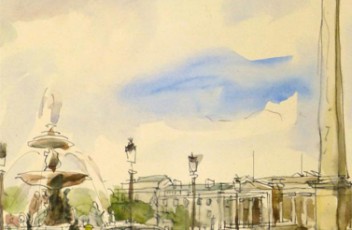
Herve Baille - Place de la Concorde 1952
We can help you choose the perfect piece for your space, but it helps if you can do a bit a groundwork before coming to Round Top. Here are some ideas to get you going:
1. Walk around the house and think where you would like some artwork, or whether a wall needs updating.
2. Take pictures of the space so that you can see colors and shapes whilst in the booth.
3. Measure how much space you have to work with.
4. Bring frames, or pictures of frames, if you have a frame already picked out.
5. Bring house plans if you are building a house, or not yet moved in.
Have fun designing your home.
We hope to see you in our booth at Blue Hills at Round Top.  We are open 9am to 7pm (5pm on last day of show) Saturday September 19th to Saturday October 3rd 2015.


Watercolor of Place de la Concorde, Paris

Round Top Tips Spring 2015

5 Things to do before coming to Round Top, TX

Planning on coming to Round Top, TX to buy some artwork?  Here are some Round Top Tips Spring 2015.

We have thousands of antique maps, prints and original art for you to choose from, but it can be a bit daunting when you first come to our booth.  We can help you choose the perfect piece for your space, but it helps if you can do a bit of groundwork before coming to Round Top. That way you will use your valuable time more efficiently whilst you are at Round Top.

Here are some ideas to get you going:

1. Walk around the house and think where you would like some artwork, or whether a wall needs updating.
2. Take pictures of the space so that you can see colors and shapes whilst in the booth.
3. Measure how much space you have to work with.
4. Bring frames, or pictures of frames, if you have a frame already picked out.
5. Bring house plans if you are building a house, or not yet moved in.

Have fun designing your home.

Hope you found these Round Top Tips Spring 2015 helpful.

We hope to see you in our booth at Blue Hills at Round Top. We are open 9am to 7pm (5pm on last day of show) Saturday September 19th to Saturday October 3rd 2015.